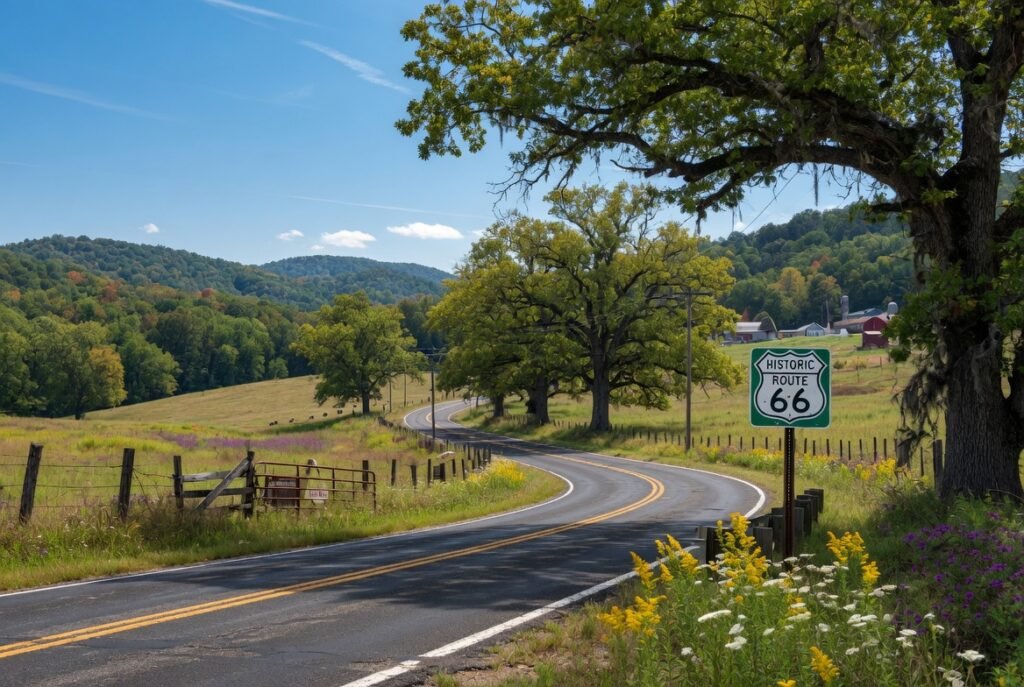

This year marks a century since the Mother Road was officially commissioned, and the celebrations are already in full swing. Yet behind the neon signs, vintage cars, and Instagram sunsets lies a far more fascinating, messy, and surprisingly modern tale than most history books care to admit.
When the U.S. Highway 66 was designated on November 11, 1926, it wasn’t born from romantic wanderlust. It was a hard-nosed economic survival project. Congress and business leaders needed to connect the struggling rural Midwest and Southwest to the booming California economy. What they created was America’s first true “people’s highway,” stitching together over 2,400 miles of existing roads through eight states and dozens of small towns that had been largely ignored by the railroads.
The Road That Refused to Die
Route 66’s real legend wasn’t written in 1926. It was written in the 1930s when desperate Dust Bowl families loaded everything they owned onto jalopies and headed west on what John Steinbeck famously called “the mother road.” Then, just as the country began recovering, the road became the escape route for millions of young Americans during World War II seeking defense jobs on the West Coast.
By the 1950s it had evolved again, this time into the ultimate symbol of postwar freedom. Diners, motor courts, and service stations popped up like mushrooms after rain. Families discovered the joy of road trips. Teenagers found freedom behind the wheel. The highway became both economic engine and cultural mirror.
Why 2026 Feels Different
Here’s the contrarian truth most anniversary coverage will gloss over: Route 66’s 100th birthday isn’t really about nostalgia. It’s about rediscovery.
After being officially decommissioned in 1985 in favor of shiny interstates, the road should have faded into history. Instead, something unexpected happened. A grassroots revival movement, fueled by local businesses, historians, and passionate volunteers, brought the old alignment back to life in pieces. Today more people are driving the original route than at any time since the 1960s.
This resurgence carries surprising relevance for our current moment. In an era of algorithmic feeds and virtual experiences, there’s growing hunger for tangible, grounded adventures that can’t be scrolled past. Route 66 delivers exactly that: an analog experience in a digital world.
The Environmental and Economic Reality Check
The revival isn’t without its tensions. Communities along the route are wrestling with how to celebrate this milestone while remaining fiscally responsible and environmentally conscious. Many towns are cleverly repurposing existing infrastructure rather than building new, turning abandoned gas stations into EV charging cafes and historic motels into solar-powered boutique stays. The smartest leaders understand that authentic preservation and modern innovation aren’t enemies; they’re partners.
What makes this 100-year milestone genuinely exciting is how it reflects our evolving definition of progress. The same road that once symbolized industrial ambition and Manifest Destiny now represents something more nuanced: thoughtful reconnection with place, history, and human-scale adventure.
As we head into the official centennial celebrations in 2026, the Mother Road offers more than just a scenic drive. It offers perspective. In a time when everything feels unprecedented, Route 66 quietly reminds us that America has reinvented itself on this stretch of pavement before, and will likely do so again.
The road didn’t just connect Chicago to Los Angeles. It connected past to present, struggle to triumph, and individual dreams to a collective American story that’s still being written, one mile at a time.
Our Other Articles
- Why Your Route 66 Road Trip Needs These 5 Jaw-Dropping Natural Detours

- Route 66 Turns 100 in 2026: The Ultimate Centennial Road Trip Guide

- Why Route 66’s Neon Nights and Vintage Motels Still Outshine Modern Travel
- Why These 6 Insanely Quirky Route 66 Stops Reveal More About America Than Any Museum Ever Could
- Why These 6 Iconic Stops on Route 66 Will Completely Change How You See America

- Your 2026 Route 66 Road Trip Blueprint: How to Actually Enjoy the Mother Road Without Losing Your Mind
- The Untold Story Behind Route 66’s 100th Birthday: What They Never Taught Us in School
- Why Everyone Needs to Ditch the Apps and Drive Route 66 the Old-School Way, 100 year Anniversary

Leave a Reply