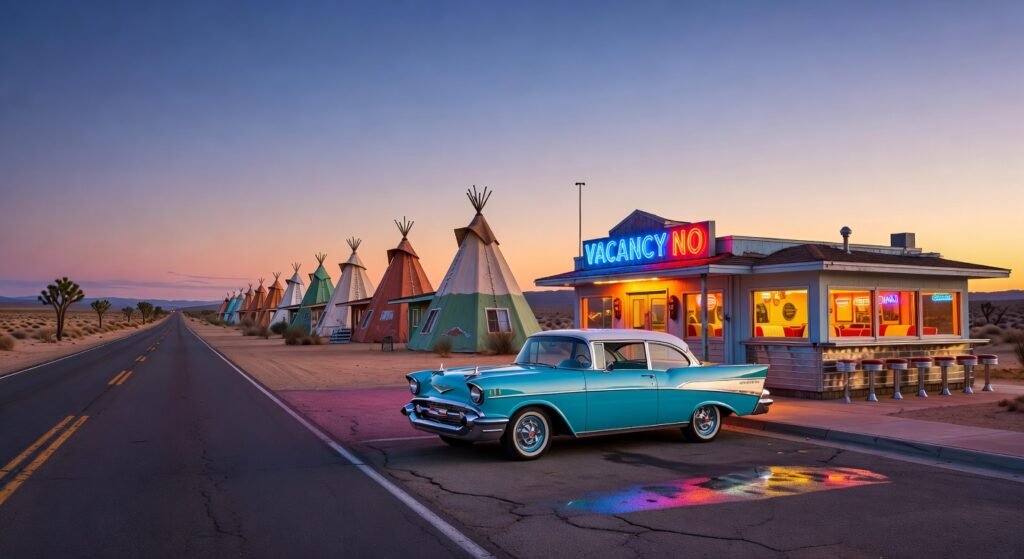

The open road has a way of resetting your perspective. On Route 66, that reset happens somewhere between the buzz of vintage neon, the smell of fresh-cut fries at a classic drive-in, and the unmistakable feeling of pulling up to a motel shaped like a giant wigwam. This isn’t nostalgia for nostalgia’s sake. It’s a smarter, slower, and far more memorable way to travel that tech-savvy explorers are quietly rediscovering.
Sleeping Where the Past Still Feels Alive
There’s something disarmingly brilliant about checking into the Wigwam Village in Holbrook, Arizona. Each concrete teepee is simple, spotlessly clean, and genuinely comfortable. No smart-room panels, no algorithmic room service—just solid retro design that has outlasted decades of travel trends. Roy’s Motel in Amboy offers a similar stripped-back charm with its iconic neon sign glowing against the Mojave Desert sky. These places prove that authentic character beats standardized luxury every single time.
Modern travelers who optimize every minute of their lives are finding unexpected freedom in these historic motels. You trade points and status for stories. The tradeoff feels increasingly rational in a world drowning in sameness.
Chasing Neon After Dark
One of the purest pleasures on Route 66 is hunting neon signs once the sun drops. The Mother Road’s surviving motels and diners kept their original signage, and at night they transform into living museums of light. Cruising through small towns with the windows down, watching turquoise, hot pink, and emerald green tubes flicker against brick and steel is borderline hypnotic.
This isn’t Instagram bait. It’s a reminder that beauty doesn’t require 4K resolution or an app. The signs were built to be seen from a moving car at 45 miles per hour, and they still work perfectly. In an age of infinite scrolling, there’s surprising wisdom in slowing down enough to appreciate handcrafted light.
Where the Food Tastes Like History
Pull into the Cozy Dog Drive-In in Springfield, Illinois and you’ll understand why some traditions refuse to die. The corn dog on a stick was invented here in 1946, and the recipe hasn’t changed. Further down the road, the Rock Café in Stroud, Oklahoma serves honest burgers and pie inside walls still embedded with fragments of the original highway.
These aren’t museums with gift shops. They’re working businesses run by people who understand that flavor and atmosphere can’t be optimized by an algorithm. The portions are generous, the coffee is strong, and the conversations at the counter often beat anything trending on your feed.
The Quiet Rebellion Against Frictionless Travel
Here’s the contrarian truth most travel influencers won’t say: the slight inconveniences of Route 66—the quirky booking processes, the lack of room service, the need to actually plan—are exactly what make the trip valuable. In removing the frictionless experience, you restore attention, presence, and genuine discovery.
Tech-minded travelers who track their screen time and optimize their workflows are the same ones discovering that Route 66 delivers better mental ROI than another perfectly planned resort vacation. The road forces you to be where you are. That rarity has become its greatest luxury.
The neon still burns bright, the wigwam beds are still comfortable, and the drive-ins are still flipping burgers. Route 66 isn’t stuck in the past. It’s waiting for those wise enough to recognize that sometimes the oldest path offers the clearest view forward.
Our Other Articles
- Why Your Route 66 Road Trip Needs These 5 Jaw-Dropping Natural Detours

- Route 66 Turns 100 in 2026: The Ultimate Centennial Road Trip Guide

- Why Route 66’s Neon Nights and Vintage Motels Still Outshine Modern Travel
- Why These 6 Insanely Quirky Route 66 Stops Reveal More About America Than Any Museum Ever Could

- Why These 6 Iconic Stops on Route 66 Will Completely Change How You See America

- Your 2026 Route 66 Road Trip Blueprint: How to Actually Enjoy the Mother Road Without Losing Your Mind
- The Untold Story Behind Route 66’s 100th Birthday: What They Never Taught Us in School
- Why Everyone Needs to Ditch the Apps and Drive Route 66 the Old-School Way, 100 year Anniversary

Leave a Reply